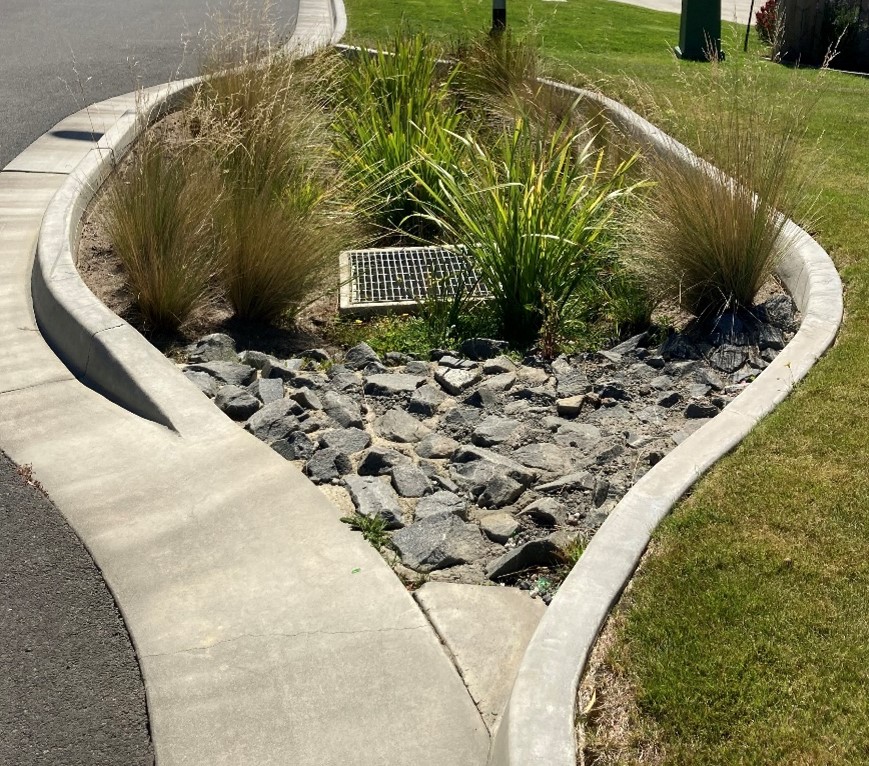
These specially designed garden beds improve the health of our waterways and help reduce stormwater flows.
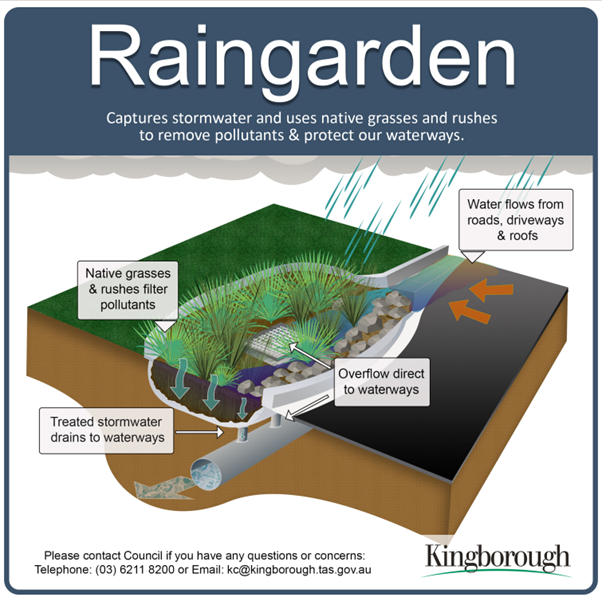
Also known as biofiltration beds, raingardens use plants and free-draining soils to capture, filter and clean stormwater. They are also a great way to prevent rubbish and litter entering our waterways.
Raingardens can capture runoff from buildings, roads, carparks and other impermeable surfaces, helping remove pollutants before the stormwater enters our creeks and rivers.
Pollutants including sediments, heavy metals, oils and other household chemicals are harmful to aquatic life and can be transported into our waterways and marine environments by rainwater runoff.
Raingardens can also protect aquatic habitats from erosion and reduce the risk of flooding by slowing down stormwater flows.
Native grasses and rushes are usually planted in raingardens, with a focus on species that can tolerate waterlogging and drying out. In Kingborough we often use sagg (Lomandra longifolia), gentle rush (Juncus amabilis), knobby club-rush (Ficinia nodosa) and short-stem flax-lily (Dianella brevicaulis).